Ellis Griffin · 5 November 2026
Regulatory Scrutiny on Private Colleges Sparks AI Program Collaborations and Tech Employment Gains
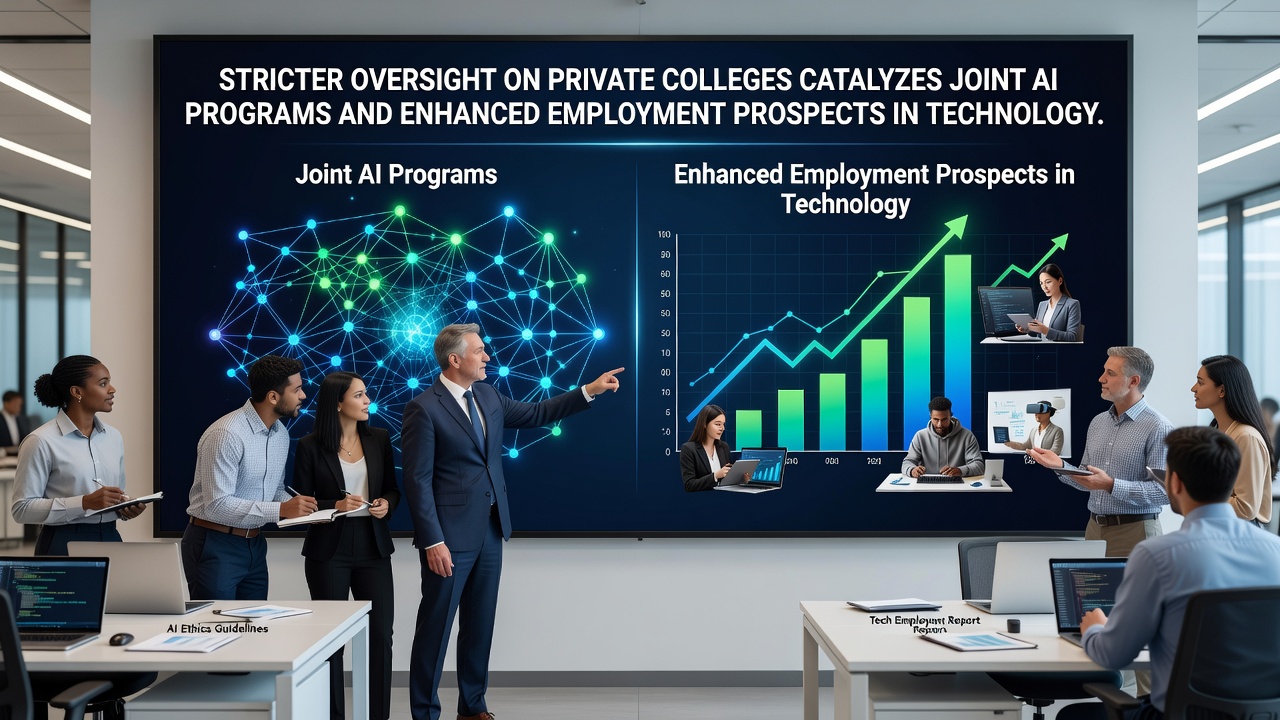
Regulatory bodies across multiple regions have intensified reviews of private colleges since early 2025, focusing on program quality, financial stability, and alignment with labor market demands, and these measures have prompted institutions to form joint AI initiatives with public universities and industry partners. Data from the US Department of Education shows that compliance requirements introduced in 2024 led to over 120 partnerships by mid-2026, many centered on artificial intelligence curricula that combine resources from several organizations. Observers note that such collaborations allow smaller private entities to access advanced computing facilities and faculty expertise without duplicating costs.
Drivers Behind Increased Oversight
Accreditation agencies and government departments in the US, EU member states, and Australia have cited enrollment declines and variable graduation rates as key factors prompting tighter standards, while reports from the OECD indicate that private colleges in these areas faced an average 18 percent drop in tech-related completions between 2022 and 2025. The new rules emphasize measurable student outcomes, transparent pricing, and integration of emerging technologies, which in turn require institutions to demonstrate partnerships that deliver practical skills. Research indicates these policies took clearer shape by November 2026, when updated reporting deadlines required evidence of cross-institutional AI projects rather than standalone offerings.
Formation of Joint AI Programs
Private colleges responded by pooling resources with public research universities and technology firms, creating shared degree pathways in machine learning, data ethics, and applied AI systems. One consortium in the Midwest United States linked three private institutions with a state flagship university, resulting in a modular curriculum that students can complete part-time while maintaining employment. Figures from the European Commission reveal similar patterns in Germany and the Netherlands, where oversight reforms encouraged 45 new AI-focused consortia during 2025 alone. These arrangements reduce redundancy because participating colleges share laboratory access, guest lecturers, and internship pipelines, and the model has expanded to include vocational tracks that blend coding bootcamps with longer academic credentials.
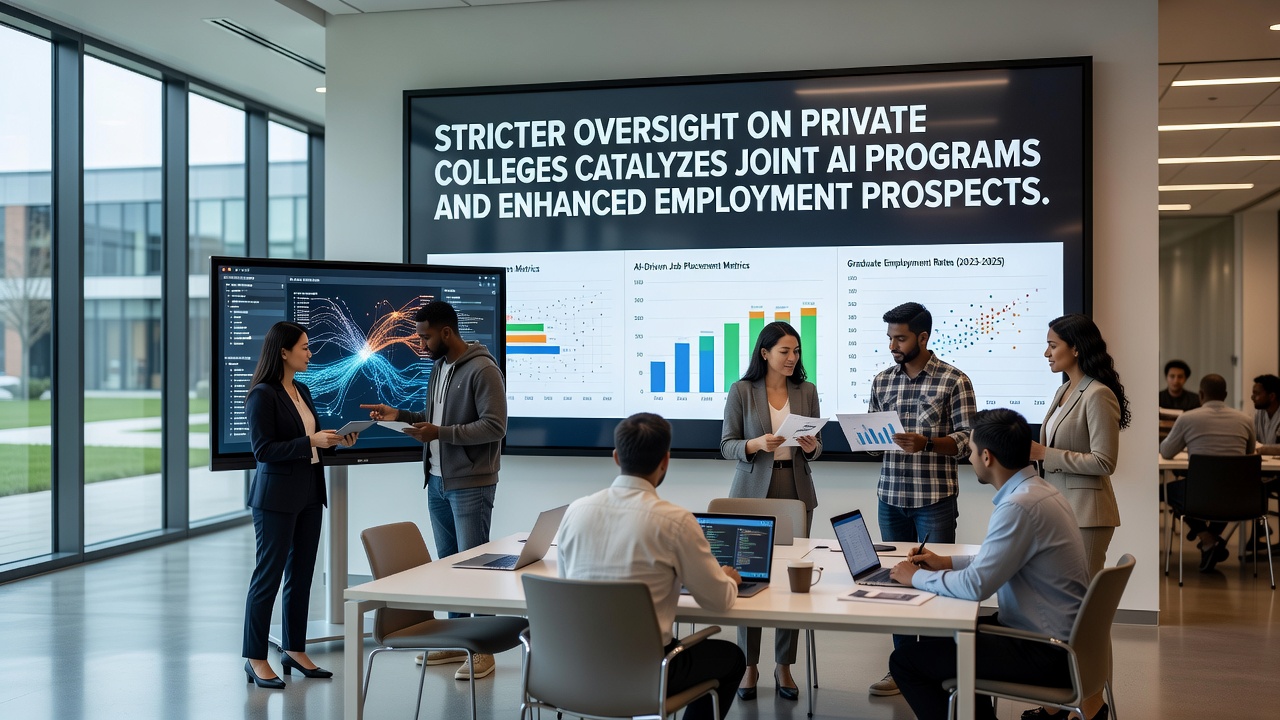
What's interesting is how these partnerships address previous gaps in hands-on training, since private colleges historically offered fewer research opportunities. Industry groups such as the Computing Research Association have documented that joint programs now incorporate capstone projects sponsored by companies, giving graduates portfolios that align directly with employer needs. Data shows enrollment in these collaborative tracks rose 27 percent year-over-year by October 2026, particularly among working adults seeking to upskill without leaving current roles.
Effects on Employment Prospects
Employment data collected by national statistical agencies point to improved outcomes for graduates of these joint programs. In the United States, the Bureau of Labor Statistics recorded a 14 percent increase in tech sector placements for participants from regulated private colleges between 2025 and 2026, while Australian government surveys found comparable gains in software development and data analysis roles. The reality is that employers cite stronger practical competencies and clearer credential recognition as reasons for preferring candidates from collaborative programs. Case examples include a network in Canada where private colleges partnered with provincial universities and local tech clusters, leading to apprenticeship-style placements that convert into full-time positions at rates above 80 percent within six months of completion.
Yet challenges remain because smaller institutions still navigate differing accreditation timelines across borders, and observers note that continued funding for shared infrastructure will determine whether gains persist. Reports from the World Bank highlight that regions investing in these alliances see faster absorption of AI talent into both established firms and startups, whereas isolated programs continue to face placement hurdles.
Looking Ahead
By November 2026, several jurisdictions plan additional guidance that ties ongoing accreditation to measurable partnership activity and employment metrics, which could accelerate existing trends. Analysts expect further integration of online components and micro-credentials that stack toward full degrees, allowing flexible entry points for diverse student populations. Research from academic centers indicates that sustained oversight paired with collaborative models tends to stabilize enrollment while elevating program relevance, although results vary by region and institutional capacity.
Conclusion
The pattern emerging across regulatory environments demonstrates that stricter oversight on private colleges has functioned as a catalyst for joint AI programs, which in turn correlate with stronger employment trajectories in technology fields. Government statistics, industry reports, and cross-national studies consistently track these shifts through 2026, underscoring how resource sharing and outcome-focused standards reshape educational pathways without prescribing specific institutional forms.