Ellis Griffin · 24 September 2026
Polish Universities' Joint AI Ventures Fuel Unexpected Shifts in Regional Part-Time Enrollments
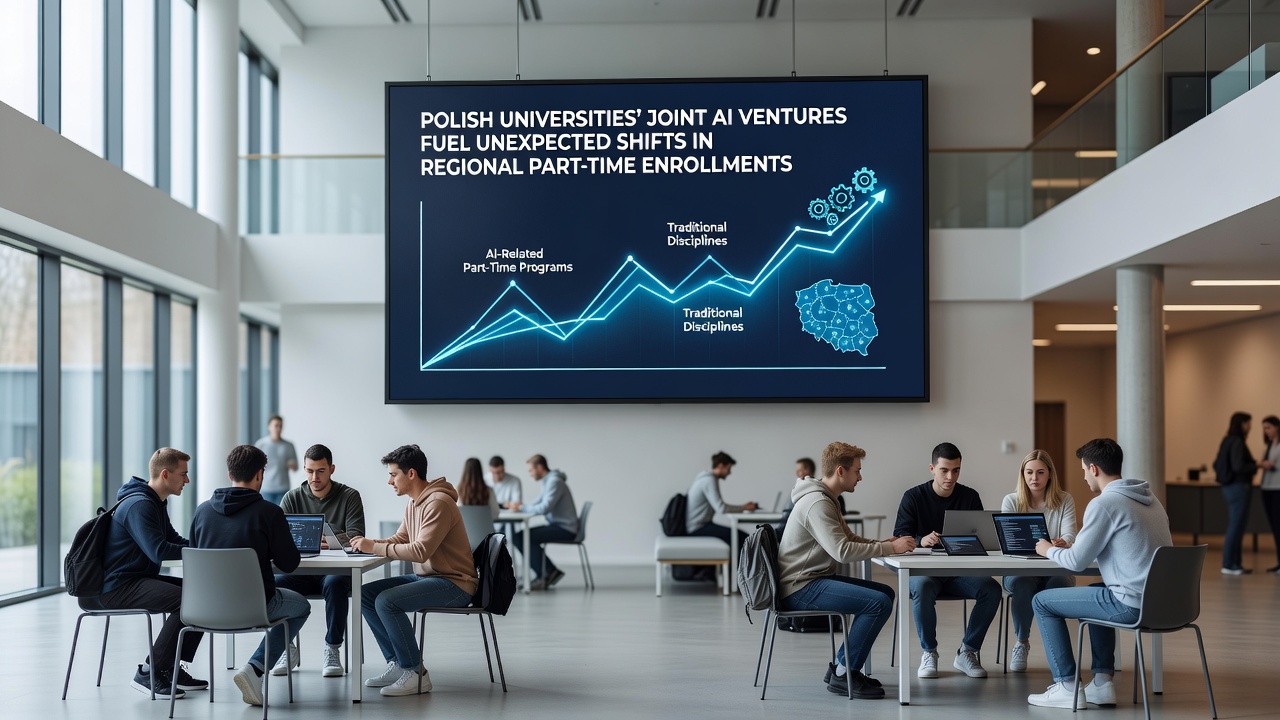
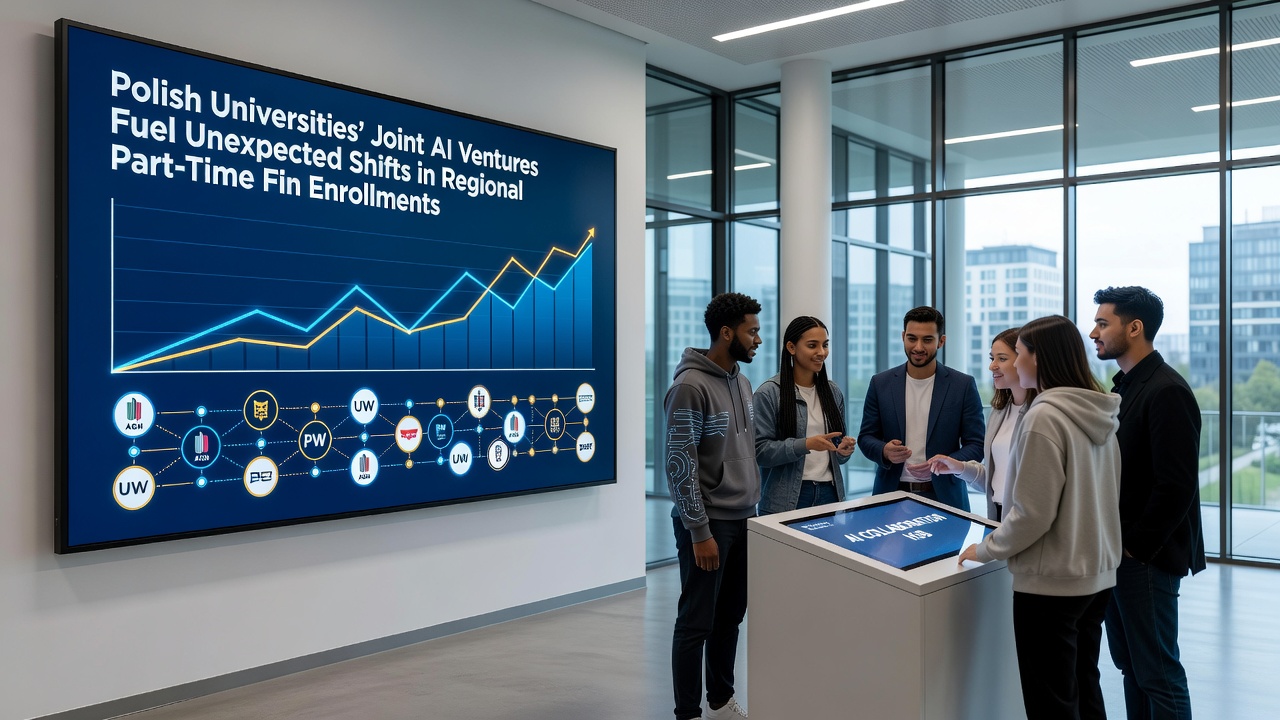
Several major Polish universities established joint AI research and teaching consortia in recent years, and these partnerships have produced measurable changes in part-time student numbers across different regions. Institutions including the University of Warsaw, Jagiellonian University, and Wrocław University of Science and Technology pooled resources to create shared AI curricula that emphasize applied machine learning, data ethics, and regional industry applications, while data from the Polish Ministry of Education and Science records enrollment shifts that began appearing in 2025 and continued through September 2026.
Formation of the AI Consortia and Program Details
Coordinated funding from national and European sources supported the launch of cross-university AI modules that part-time students can access through hybrid formats, and observers note that these modules integrate with existing evening and weekend schedules common in regional centers. The consortia developed standardized course sequences that allow students in smaller cities to complete credits without relocating, which aligns with workforce retraining needs in manufacturing and logistics sectors that increasingly adopt automation tools.
Enrollment records show that part-time programs in AI-related fields grew by 18 percent in the Silesian and Lesser Poland voivodeships between the 2024-2025 and 2025-2026 academic years, according to figures released by the Central Statistical Office of Poland. These increases occurred alongside steady or slightly declining numbers in some traditional full-time tracks at the same institutions, suggesting a redistribution rather than overall expansion of higher education participation.
Regional Enrollment Patterns Observed in 2026
Analysts tracking September 2026 intake data identified concentrated growth in part-time cohorts at satellite campuses located in Katowice, Rzeszów, and Bydgoszcz, where joint AI offerings became available for the first time. Local employers in automotive and energy sectors partnered with the consortia to sponsor employee enrollment, creating direct pipelines that reduced the time between course completion and workplace application of new skills.
Researchers from the OECD Directorate for Education and Skills documented similar patterns in other European countries where universities collaborated on emerging technology programs, and those studies indicate that hybrid delivery models often draw students who balance work and study in mid-sized cities rather than capital regions. Polish data appears consistent with those broader trends, although the speed of the shift surprised some administrators who had projected slower adoption outside major urban centers.
Factors Driving the Enrollment Redistribution
Improved digital infrastructure in regional areas, combined with targeted marketing of the joint AI programs, contributed to higher application rates from working professionals who previously viewed technology studies as inaccessible. The consortia offered modular micro-credentials that stack toward full degrees, allowing participants to demonstrate incremental progress to employers and thereby lowering perceived risk of enrollment.
Government statistics further reveal that women comprised 42 percent of new part-time AI enrollees in the affected regions during the 2026 cycle, a proportion higher than in earlier technology programs and aligned with outreach efforts that highlighted flexible pacing and industry mentorship components. Academic staff involved in the ventures report that curriculum adjustments based on regional employer feedback helped maintain relevance without requiring students to travel for specialized labs.
Implications for University Planning and Resource Allocation
University administrators have begun reallocating faculty time and digital platform investments toward the regional sites that experienced the largest enrollment jumps, and preliminary budget documents indicate increased spending on remote proctoring systems and localized tutoring services. These adjustments reflect responses to the observed demand rather than preemptive policy decisions.
International comparisons compiled by the European Commission’s Joint Research Centre on digital skills training show that collaborative university models can accelerate skill development in non-capital regions when industry linkages are strong, and Polish outcomes so far match several of the indicators tracked in those reports. Continued monitoring through 2027 will clarify whether the enrollment patterns stabilize or continue evolving as additional joint AI initiatives reach full operation.
Conclusion
Joint AI ventures among Polish universities have coincided with clear redistribution of part-time enrollments toward certain regional campuses by September 2026, driven by hybrid program design and employer partnerships. Official statistics and cross-national research both document these developments, providing a factual basis for understanding how collaborative technology education can influence where and how students choose to study while remaining employed. Future data releases will show whether the trends persist or prompt further adjustments in institutional strategies.